
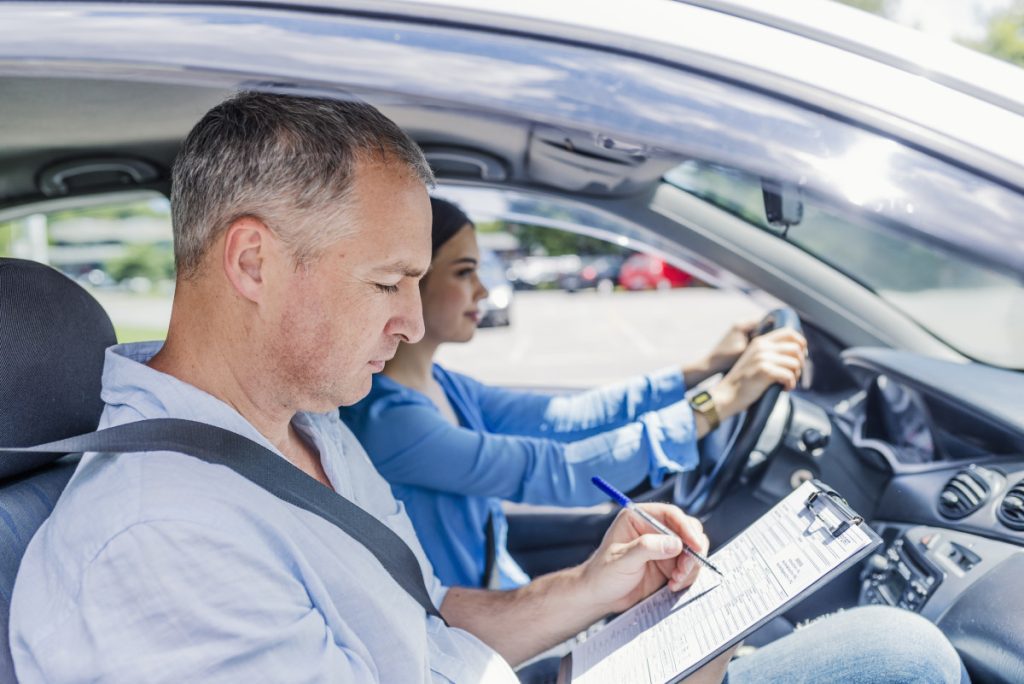
For most drivers, the easiest and safest way to turn around is to use a roundabout or reverse safely into a side street. If those options aren’t available, you may need to turn the vehicle around in the road itself. This article explains exactly how to do that (the classic “three-point turn,” officially called a turn in the road) with full control, strong observation, and minimal stress.
What you’re aiming to achieve
You should be able to turn the car around:
On a flat road and on a road with a camber
Under full control, without stalling or rolling
By accurately judging the width of the road
While looking for and responding to other road users
Without running into or mounting either kerb
You should know how to:
Observe carefully all around throughout the manoeuvre, especially checking blind spots
Respond safely and promptly to other road users
Coordinate hand and foot controls so the car moves smoothly
Steer correctly while turning as tightly as possible, without scrubbing the tyres or losing control
What is a three-point turn (turn in the road)?
A three-point turn is a controlled sequence that turns your vehicle to face the opposite direction on a road too narrow for a U-turn. Despite the name, you might use more than three points if space is tight or conditions demand it; safety and control matter more than the number of movements.
Although the “turn in the road” is no longer a set test manoeuvre, the skill is still valuable. You’ll use it in real life when no safe roundabout, junction, car park, or side street is available.
Before you begin: is this the best option?
Work through these quick checks:
Is there a safer alternative? Prefer a roundabout, a large junction, or reversing into a quiet side street if available.
Is it legal and appropriate here? Avoid areas signed “No U-turn,” busy or high-speed roads, bends, brows of hills, and locations near junctions, crossings, or school entrances.
Is the surface suitable? Look for level or gently cambered tarmac, decent grip, and good visibility both ways.
Is there space? Ideally no parked cars close by and enough width to complete the manoeuvre without mounting the kerb.
What’s the traffic flow like? Choose a quiet moment. If traffic appears mid-manoeuvre, you must be ready to pause safely and give priority.
Observation routine (before and during)
Strong observation is the difference between a tidy turn and a risky one.
Before moving off each time: Mirrors (interior, then door), blind spots over both shoulders, and a look ahead along the road.
While crossing the carriageway: Keep scanning both directions for oncoming traffic, cycles, and pedestrians.
Before reversing: Mirrors again, both shoulders, and check the pavement behind for pedestrians.
Before the final forward move: Full all-round check once more.
Signal only if it helps other road users understand your intention (e.g., a short right signal before your initial move). Don’t rely on hazard lights; they can confuse others while you are moving.
Vehicle control you’ll use
Speed: Walking pace or slower. Smooth clutch control in a manual, gentle accelerator/brake balance in an automatic.
Steering: Turn the wheel quickly while the car moves very slowly. Full lock is typical.
Brakes/Handbrake: Use the footbrake to control roll; use the handbrake to secure the car on gradients when stopped.
Gears:
Manual: usually 1st for forward movements, Reverse for backward, with good clutch control at the bite.
Automatic: select D for forward, R for reverse; pause fully before changing direction.
Step-by-step: the classic three-point turn
The descriptions below assume you start on the left-hand side of a typical UK road, parked close and parallel to the kerb.
Point 1: Forward across the road (left to right)
Prepare the car (POM): Select 1st gear (or D), set the bite (manual), release the handbrake if safe.
Observe all round: mirrors, right shoulder, ahead, left shoulder.
If helpful, signal right to inform following traffic.
Move at a crawl and steer briskly to the right towards full lock.
Aim to stop about a metre from the right-hand kerb, wheels still turned to the right, with the car straight or slightly angled.
Secure if on a slope (footbrake to handbrake transfer).
Point 2: Reverse towards your starting side
Select reverse (or R) and take a breath—this is a new movement.
Full all-round observation, especially your left shoulder and behind through the rear window.
Move back slowly and steer briskly to the left towards full lock.
Watch the front of your car: the nose swings right when reversing left—ensure you won’t clip anything.
Stop about a metre from the left kerb, with good space ahead for the final movement. Secure if needed.
Point 3: Final forward movement to straighten and drive away
Select 1st (or D) and reset your steering toward the road ahead.
All-round observation again; give priority to any traffic now present.
Move off at a crawl, add a touch of right lock if needed to keep clear of the left kerb, then straighten the wheels.
Build speed smoothly and continue your journey.
If the road is very narrow, you may need additional points (e.g., a gentle forward-back-forward sequence). That’s normal: take as many controlled points as needed without touching the kerb or endangering others.
Variations: gradients, cambers, narrow and wide roads
On a gradient (uphill or downhill)
Uphill: Use a slightly higher bite point (manual) and consider the handbrake to prevent roll-back between points. Plan a slightly wider arc so you don’t stall while steering.
Downhill: Feather the footbrake to control speed; be ready to secure the car at each pause. Keep steering movements smooth—momentum builds quickly.
On a cambered road
Camber may pull the car toward the kerb. Anticipate it by modulating steering and speed. Expect to apply more steering to hold your intended path.
On a narrow road
You’ll likely need more than three points. Prioritise kerb clearance over “doing it in three.” Keep the speed ultra-slow and steering brisk.
On a wide road
There’s room to spare, but don’t get complacent. Maintain the same observation routine and slow speed; aim to complete in three tidy points.
Judging road width and kerb clearance
Kerb gap target: About 1 metre from either kerb at your stopping points is a safe working gap.
Reference cues: Watch how quickly the opposite kerb approaches; if it’s closing fast, reduce steering or stop earlier.
Front swing awareness: When reversing left, the front swings right; ensure there’s space to avoid clipping parked cars or posts.
Wheel straightening: Before each stop, try to reduce steering angle slightly; it makes the next movement easier to start accurately.
Common problems and simple fixes
Mounting or touching the kerb: You turned too late or moved too fast. Slow down, start steering earlier, and use smaller corrections.
Stalling (manual): Raise the revs slightly, hold a firm bite, and keep movements gentle.
Rolling on slopes: Use the handbrake between points; balance the pedals carefully when moving off.
Over-steering/under-steering: Turn the wheel briskly while the car is barely moving; pause if you need time to apply more lock.
Poor observation: Build a habit—check before each new movement and scan continuously while moving.
Giving way and responding to others
You must give way to traffic, cycles, and pedestrians at all times during the manoeuvre. If anyone approaches:
Pause in a safe position (ideally not straddling the centre).
Make eye contact where possible.
Wave others through only if you’re sure it’s safe and you’re not creating confusion.
Resume only when the road is clear and you’ve re-checked blind spots.
Signalling and lights
A brief right indicator before the initial move can help following traffic understand your intention. Cancel once you’ve crossed the centre line.
Avoid using hazard lights while moving; they can confuse others. Use them only if you become a stationary obstruction and it’s necessary to warn approaching traffic (and legal to do so).
Manual vs automatic: what changes?
Manual: The clutch is your fine-control tool. Hold a steady bite, keep engine revs modest, and move the steering while the car creeps. Use the handbrake on slopes between points.
Automatic: Control speed with light brake/creep; avoid sudden throttle inputs. Pause fully before changing between D and R. Consider applying the parking brake at each stop on steeper gradients.
Is a three-point turn on the driving test?
The DVSA test no longer includes the “turn in the road” as a set manoeuvre. However, the skills used here—control, observation, decision-making, and priority—are assessed throughout your test and everyday driving. It remains a valuable real-world skill.
When to use (and not use) a three-point turn
Use it when:
The road is too narrow for a U-turn.
A roundabout, car park, or side street isn’t available.
Traffic is light and visibility is good.
Avoid it when:
Traffic is heavy or fast-moving.
You’re near a junction, on a bend, or on the brow of a hill.
Signs or local regulations prohibit turning.
Visibility is poor (darkness, fog) and you can’t be clearly seen.
Step-by-step quick reference (printable)
Pull up safely on the left. Prepare the car.
Full all-round observation; signal right if helpful.
Move very slowly; steer full right to approach the opposite kerb; stop with clearance.
Select reverse; full observation, especially behind and over shoulders.
Reverse very slowly; steer full left back toward the starting side; stop with clearance.
Select forward gear; full observation; move off and straighten promptly.
Practice plan with an instructor (Rated Driving approach)
Site selection: Quiet, straight road with good width and visibility, then progress to more realistic locations.
Demo and guided practice: Your instructor demonstrates once, then guides you through each point with clear prompts.
Reference points: You’ll learn simple visual markers for when to start or reduce steering.
Gradients and camber: Practise both so clutch/creep control and braking become automatic.
Independent attempts: Build consistency, then add mild pressure (light traffic) to improve decision-making.
Review: Short debrief after each attempt; focus on observation quality, kerb clearance, and control smoothness.
Safety checklist before you move away
Doors secure, seat and mirrors set, seatbelt fastened.
Clear, legal location with good visibility.
All-round observation completed; blind spots checked.
Controls prepared for a very slow, smooth movement.
Ready to pause and give priority at any time.
Key takeaways
Prefer safer alternatives (roundabout, side street) when available.
If you must turn in the road, keep it very slow, steer briskly, and observe constantly.
Take as many points as needed—control beats speed.
Never mount the kerb and always give way to others.
Practise on a range of roads (flat, cambered, narrow, gradient) to build full confidence.
With structured practice and clear routines, turning the car around becomes a calm, accurate manoeuvre you can perform anywhere it’s safe to do so. Rated Driving’s instructors will help you refine smooth control, precise steering, and excellent observation—so you can turn confidently, without drama, every time.
Top Tip for Turning in the Road (Three-Point Turn) 👨🏫
“A smooth turn in the road is all about patience, not perfection. Don’t rush to complete it in three points—focus instead on clear observation, slow control, and staying off the kerb. If the road is narrow or on a slope, take as many movements as you need to stay safe and accurate.
Before each movement, do a full all-round check—including blind spots—and remember: your steering should be quick, but the car should always move at walking pace. Mastering this manoeuvre builds real-world driving skill, even if it’s not part of the driving test anymore.”
Shorif Kazi – DVSA Approved Driving Instructor
Three-Point Turn FAQ's
No. Since December 2017, the three-point turn (turn in the road) is no longer part of the practical test, but it’s still a useful skill to know.
A U-turn is one continuous turn in a wide enough road. A three-point turn uses forward and reverse movements to turn in a road too narrow for a U-turn.
Yes, if it benefits other road users. Always follow the mirror–signal–manoeuvre routine before starting.
Yes. The “three points” are a guideline — take as many as needed to complete the turn safely and under full control.
On a quiet road, away from junctions, bends, parked cars, and driveways, where you have a clear view in both directions.
No. On busy or high-speed roads, it’s unsafe. Use a roundabout, car park, or side street instead.
Aim to stop about 30–50 cm from the kerb without mounting it.
Yes. The only difference is gear selection — use “Drive” instead of first gear, and “Reverse” as normal.
Not checking blind spots, turning the steering too late, going too fast, and mounting the kerb.
Start on a quiet residential road with your instructor, then practise in different conditions to build confidence.