
Bay parking can feel intimidating when you’re just starting out, especially in a busy car park. But with a bit of know-how and regular practice, this essential driving skill becomes second nature. Whether you’re a learner preparing for your test or a new driver aiming to build confidence, this in-depth guide covers everything you need to master both forward and reverse bay parking safely and accurately.
What Is Bay Parking?
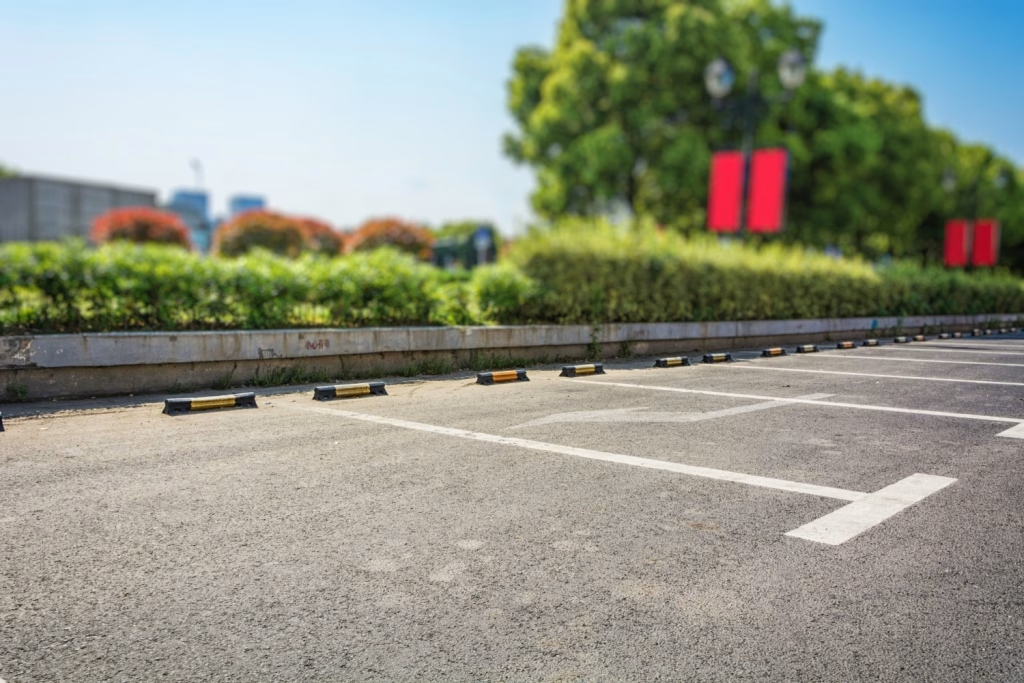
Bay parking is the process of positioning your vehicle neatly within a marked parking space, commonly found in supermarket car parks, shopping centres, and multi-storey garages. There are two main types of bay parking:
Reverse Bay Parking
Reversing into a parking bay and then driving out. This is often safer and more convenient when exiting, as it gives you better visibility.
Forward Bay Parking
Driving directly into the space and reversing out when you leave. This is often easier for newer drivers but requires extra care when reversing back out into traffic.
Why Bay Parking Matters for Learner Drivers
Everyday Use
Bay parking is a vital everyday driving skill. Most public and private car parks use bay layouts, so you’ll need to know how to park safely without risking scrapes or penalties.
It’s on the Driving Test
Since December 2017, the DVSA driving test includes one of three manoeuvres:
Forward bay park and reverse out
Reverse bay park and drive out
Parallel park
You won’t know which manoeuvre you’ll be asked to perform, so it’s essential to be ready for all three.
Understanding Parking Bay Dimensions
Knowing the space you’re working with is crucial. In the UK:
Standard parking bays are typically 2.4m wide by 4.8m long.
A 6m manoeuvring space is often left between rows of bays.
Angled bays (also called echelon bays) are less common but easier to enter.
Tip: Not all bays are equal. Some may be narrower than standard, so always assess the space before attempting the manoeuvre.
Key Things to Check Before You Start
1. Observation
Look around for pedestrians, especially children or trolley-pushers. In busy car parks, observation is your top priority.
2. Mirrors and Blind Spots
Check all mirrors and perform a full blind spot check before moving. Continue scanning your surroundings throughout the manoeuvre.
3. Traffic Rules
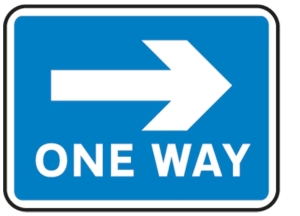
If the car park has a one-way system, make sure you enter and exit bays accordingly.
How to Forward Bay Park (Step-by-Step)
Step 1: Choose a Suitable Space
Make sure there’s enough space between cars.
Avoid bays next to badly parked vehicles or columns in multi-storey car parks.
Step 2: Position Your Car
Stay on the opposite side of the road from the bay you want to enter.
Leave about a car’s width between your vehicle and the bay for a wide turning circle.
Step 3: Line Up Reference Points
When the right-hand bay line appears just under your right wing mirror, that’s your cue to steer.
Step 4: Steer Into the Bay
Turn the wheel to full right lock (or left if entering a left-hand bay).
Enter slowly and begin to straighten the wheel when your dashboard is parallel with the bay lines.
Step 5: Final Adjustments
Stop when the front of your car is aligned with the line or kerb in front of you.
Adjust if necessary using small forward/reverse movements.
How to Reverse Out of a Forward Bay Park
Step 1: Preparation
Select reverse gear.
Check mirrors and blind spots thoroughly.
Step 2: Move Back Slowly
Begin reversing slowly. Be alert to other vehicles or pedestrians.
Step 3: Steering Out
When your car is one-third out of the bay, steer full lock in the opposite direction to where you want to go.
Step 4: Exit Safely
Continue to reverse until you’re clear of the bay.
Shift to first gear and move off once the road is clear.
How to Reverse Bay Park (Step-by-Step)
Reverse bay parking gives you more control when positioning your car. These steps assume you’re parking into a left-hand side bay.
Step 1: Assess the Space
Confirm there’s enough width and depth.
Use a car-width gap between you and the bay row for better turning.
Step 2: Line Up Your Reference Point (A)
Pull up so the middle of your passenger door lines up with the second white line past your chosen bay.
Select reverse gear and pause.
Step 3: All-Around Observation
Before reversing, check mirrors, over your shoulders, and blind spots.
Step 4: Begin Reversing (Point B)
Steer full left lock and slowly begin reversing.
The left bay line will appear in your left wing mirror.
Step 5: Use the Right Mirror (Point C)
Watch the right bay line appear in your right mirror.
Keep both lines in sight as you slowly back in.
Step 6: Straighten Up (Point D)
As the car becomes parallel with the bay lines, straighten the wheel.
Both lines should remain visible in your wing mirrors.
Step 7: Final Positioning
Continue edging back until you’re fully within the bay.
Stop before touching any kerb, wall, or car behind.
Driving Out of a Reverse Bay Park
Step 1: Check Everything
Use mirrors and blind spots.
Ensure the area is clear of other vehicles, people, or trolleys.
Step 2: Move Out Slowly
When around one-third out of the bay, begin steering in the direction you want to go.
Ensure you’re following the car park’s one-way system.
Using Reference Points
Using reference points helps build muscle memory and confidence. Here’s a quick guide to the most useful ones:
Point A: Line up the middle of your passenger door with the second line past the chosen bay.
Point B: Watch for the left bay line in your left mirror while reversing on full lock.
Point C: Spot the right bay line in your right mirror as the car enters the bay.
Point D: Both lines are equally visible, confirming you’re straight and central.
Practice these repeatedly in quiet car parks to build up confidence.
Common Bay Parking Mistakes and How to Fix Them
Mistake 1: Steering Too Late or Early
Fix: Practice spotting your reference point and steering immediately on cue.
Mistake 2: Over or Under Steering
Fix: Use full lock when needed and straighten once aligned.
Mistake 3: Poor Observation
Fix: Make it a habit to check mirrors and blind spots before and during the manoeuvre.
Mistake 4: Rushing the Manoeuvre
Fix: Stay calm and take it slow. You’re allowed to pause and adjust.
Mistake 5: Not Straightening Up
Fix: Use your mirrors – if you can see both bay lines, you’re straight. Adjust if needed.
Will You Have to Bay Park on the Driving Test?
Yes, possibly. The DVSA test will include one of the following reversing manoeuvres:
Forward bay park and reverse out
Reverse bay park and drive out
Parallel park at the roadside
The examiner will tell you which one to do, and it could happen at the test centre or in a public car park.
Will You Fail If You Mess Up the Bay Park?
Not necessarily. Examiners are looking for three main things:
1. Control
Smooth steering and speed.
2. Accuracy
Ending up between the lines, not too far left or right.
3. Observation
Continuous mirror and blind spot checks.
If you need to readjust, that’s okay — you might get a minor fault, but you’ll still pass. However, hitting another car, mounting a kerb, or serious misjudgement could result in a serious fault and a test fail.
Tips for Perfecting Your Bay Parking
Practice in empty car parks during off-peak hours
Use cones or boxes to simulate bays if markings aren’t available
Ask your instructor to guide you through common test manoeuvres
Take your time — confidence comes with repetition
Use tech wisely: Sensors and reversing cameras are helpful, but don’t rely on them alone
Final Thoughts
Bay parking doesn’t have to be stressful. Like any skill, it becomes easier the more you do it. Mastering both forward and reverse techniques ensures you’re ready for real-life car parks and your driving test. Focus on accuracy, observation, and control, and with practice, you’ll be gliding into bays like a pro.
Stay calm, take your time, and remember: even experienced drivers need to readjust sometimes. You’ve got this.
Parking Bay FAQ's
Bay parking is when you park your car in a marked bay, either by reversing in or driving in forwards.
Forward bay parking means driving into the space and reversing out. Reverse bay parking means reversing in and driving out.
Yes. The examiner may ask you to either reverse into a bay and drive out or drive in and reverse out.
Most UK bays are 2.4m wide and 4.8m long, with 6m of space between rows for manoeuvring.
It can feel harder at first, but it often gives better visibility and is safer when exiting.
Yes, you should use your door mirrors, rear-view mirror, and check blind spots throughout the manoeuvre.
You may get a minor fault if you correct the error safely. Serious errors, like poor control or observation, can result in a fail.
Start in quiet or empty car parks, and use reference points to help you judge angles and position.
They’re visual markers (like mirror alignment with bay lines) that help guide your steering and positioning.
Not always. The examiner will choose a suitable space, which may or may not have cars on either side.