
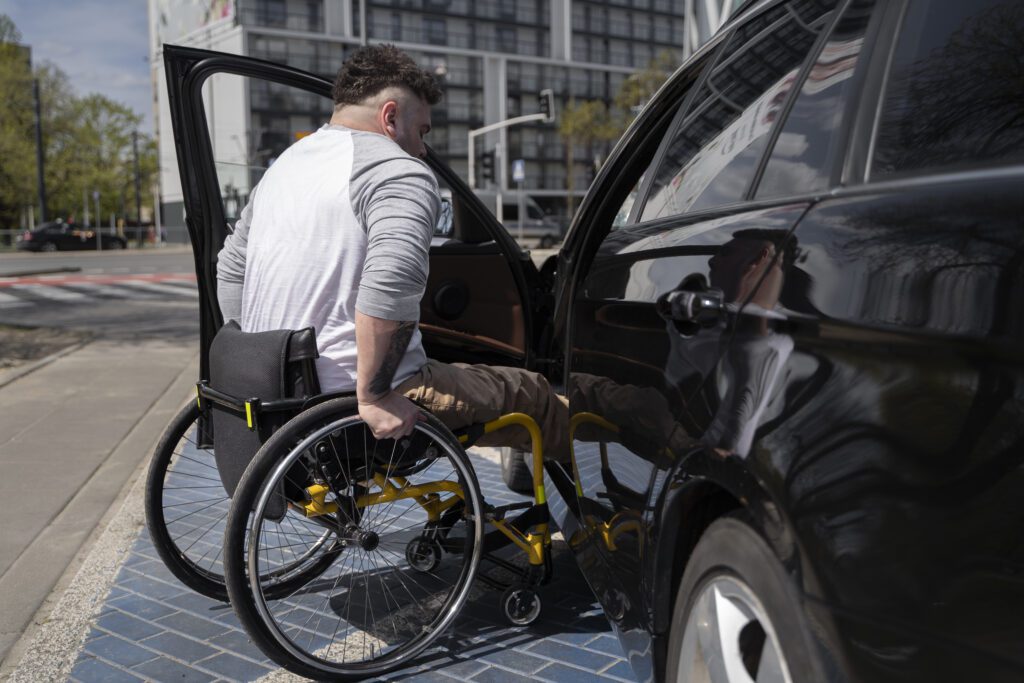
For new professional drivers, understanding accessible transport rules ensures that passengers with disabilities can travel safely and comfortably, just like anyone else.
Over the last few years, making transport more accessible has become a big priority in the UK. This shift is reflected in updated government policies and new legal duties for drivers, which aim to ensure that all passengers can use taxis with confidence and dignity.
New drivers must learn accessibility regulations to meet industry standards and support safe, independent travel for passengers with disabilities.
Legal Requirements for Drivers of Accessible Vehicles
UK law includes provisions to support accessible transport for passengers with disabilities. Taxi drivers are expected to provide reasonable assistance and ensure fair treatment for all passengers. This practical guide from Transport for All outlines the main responsibilities drivers have under accessibility law, including rules on refusing service and what assistance must be provided.
Many areas recommend or require disability awareness training, covering equipment handling and communication skills. Practical sessions can help drivers practise using ramps and securing systems safely, lowering risks when assisting passengers.
Not following accessibility guidelines can result in penalties. Drivers who do not provide necessary assistance or refuse service to passengers with disabilities may face fines or other disciplinary actions, depending on local regulations.
Licensing requirements can differ depending on the region within the UK. Some areas have stricter standards than others. For example, London requires all black cabs to be wheelchair accessible, while other regions may have different requirements for their fleets. Drivers should check the specific rules that apply in their area.
Key Vehicle Features That Meet UK Accessibility Standards
Wheelchair accessible vehicles are expected to meet certain standards to ensure proper access. Requirements often include door openings and interior layouts that accommodate standard wheelchairs, as well as designs that allow for easy entry and exit. Local councils may provide vehicle specifications to help drivers understand what is required.
Wheelchair tie-downs and separate seat belts are essential safety features, designed to prevent movement and protect passengers during travel.
Ramps prioritise safety through anti‑slip surfaces, side guards, and suitable gradients. As outlined in this guide to UK disability ramp regulations, drivers should check that ramps are in good condition and suitable for the wheelchairs they expect to carry.
Vehicles must offer adequate interior space for standard wheelchairs and safe manoeuvring, following local compliance guidelines.
Communication adaptations are an important part of making taxis accessible for all passengers. Features such as clear signage in large print can help those with visual impairments, while hearing loops can assist passengers who use hearing aids. Some UK taxi fleets have implemented these features to improve accessibility.
Common Challenges New Drivers Face With Accessible Transport
For new drivers, understanding the unique responsibilities associated with wheelchair accessible taxis for professionals is essential. Securing a wheelchair safely remains a consistent challenge, especially for those new to accessible transport.
Mistakes often happen when straps are too loose or when anchor points do not match manufacturer instructions. The best practice is to check all four tie-down straps before each journey.
Managing diverse passenger needs presents another challenge. Disabilities vary widely, and drivers must adjust their assistance accordingly. For example, a driver in Bradford reported that learning basic words in British Sign Language enabled smoother journeys for hearing-impaired passengers. Drivers are encouraged to practise alternative communication techniques.
Effective time management is important in accessible transport as journey times often differ from standard fares. Pickups for passengers using mobility aids can take longer than usual. Drivers can implement practical measures such as scheduling a buffer before and after accessible bookings.
In cities like Manchester, accessible taxi drivers often face navigation and drop-off challenges near major venues due to limited dedicated bays. One practical solution is cooperation with on-site security staff or event coordinators ahead of arrival.
Specialised training and resources are available to help drivers improve skills and assist passengers properly.
Financial Considerations for New Accessible Transport Drivers
The initial investment for an accessible vehicle is usually higher than for standard taxis, because of specialised equipment and conversion work. Costs vary based on the model, features, and whether the vehicle is new or used. For specific prices, consult licensed vehicle suppliers and local authorities.
Financial support may be available through grants and relief schemes. National and local programmes sometimes offer funding to help cover the cost of vehicle adaptations. Drivers can check with relevant authorities for more information about eligibility and application processes.
Insurance requirements demand careful planning. Since these vehicles include specialist equipment, standard taxi insurance may not provide full coverage. To avoid claim issues, drivers should report all adaptations and may benefit from insurance reviews after completing accessibility training.
Maintenance includes regular checks of ramps, lifts, and restraints to meet safety standards. Drivers should follow the maintenance schedules recommended by the vehicle manufacturer.
Building an Inclusive Service as a New Driver
Accessible booking systems offer multiple contact methods. Many local authorities now use booking platforms that let passengers specify if they use a wheelchair or need extra assistance. For example, some enquiry forms request details about what type of mobility aid is in use. This helps drivers to arrive with suitable equipment ready.
Clear policies regarding service animals and additional assistance help manage expectations. Drivers should understand that refusing service animals is illegal under the Equality Act 2010. Having written policies about carrying extra equipment prevents misunderstandings.
Simple feedback tools help improve service and highlight areas for growth. Addressing complaints promptly shows dedication to accessibility.
Disability organisations can offer training, guidance, and referrals, making them valuable partners. Transport authorities often maintain lists of accessible service providers, offering another source of business.
Highlighting ramp gradients, seatbelt systems, and entry options builds trust when marketing accessible services. Showing real vehicles in photos on websites and printed leaflets helps set honest expectations for your service.