

When Thames Valley Police intercepted a “fake driving instructor” in Bletchley earlier this month, it made headlines for good reason.
A learner – who thought they were receiving a legitimate £37.50-per-hour driving lesson – was, in fact, being taught by someone completely unqualified and unapproved to do so.
The car was seized, the individual penalised with six points on their licence, and a criminal investigation is now underway.
For most people, the story might sound shocking a one-off scam.
But for those of us working inside the driving instruction industry, it’s part of a deeper pattern: a sector under pressure, with vulnerabilities that bad actors are increasingly willing to exploit.
At Rated Driving, we act as an agent – connecting verified, DVSA-approved instructors with genuine learners across the UK.
We see how much trust learners place in their instructor. That’s why stories like this hit so hard – they expose the fragile line between trust and exploitation in a market that’s become crowded, competitive, and, at times, chaotic.
What Happened in Bletchley
The BBC’s report described how Thames Valley Police stopped a grey Vauxhall displaying L-plates during what appeared to be a standard learner lesson.
Upon inspection, officers discovered that the individual posing as an instructor was not approved by the Driver and Vehicle Standards Agency (DVSA) to charge for lessons.
Under UK law, anyone offering paid driving tuition must be either:
A fully qualified Approved Driving Instructor (ADI), or
A licensed Potential Driving Instructor (PDI) currently registered with the DVSA and displaying a pink trainee badge.
The suspect had neither.
They were reportedly charging £37.50 per hour, roughly in line with the going rate for legitimate tuition in the Milton Keynes area. The learner — who had no reason to suspect otherwise — believed they were progressing toward a test with a genuine instructor.
Instead, they were unknowingly breaking the law by taking paid tuition from an unqualified driver.
Why This Isn’t an Isolated Case
The case is unusual enough to make the news, but not unique.
As the industry faces record demand, shortages of qualified instructors, and months-long backlogs in testing (for both learners and new instructors), the conditions are ripe for exploitation.
Here’s the uncomfortable reality:
Learners are desperate for availability. In many towns, instructors are fully booked for months.
Social media marketplaces are unregulated. Facebook groups and community pages are flooded with offers of “cheap lessons” or “private instructors.”
Trainees in limbo. Many legitimate PDIs are stuck waiting for their final DVSA assessment — and some, frustrated by delays, begin taking paid lessons illegally.
Verification is opaque. Few learners know how to confirm whether an instructor is DVSA-approved, and fewer still are told to check.
It’s a recipe for risk — and not just for learners. Legitimate instructors are losing income to unqualified competitors, and the reputation of the profession is being undermined one fake lesson at a time.
The Legal Position: It’s Black and White
The law could not be clearer.
According to gov.uk, you must be an Approved Driving Instructor (ADI) or hold a PDI trainee licence to legally charge money for driving lessons. Both require registration, criminal background checks, and rigorous testing of instructional ability.
Unqualified individuals who charge for tuition are committing a criminal offence under the Road Traffic Act 1988.
Penalties include:
Up to six penalty points and fines for the driver,
Vehicle seizure,
Potential prosecution for fraud, and
Revocation of any future licence applications.
For learners, while they are unlikely to face penalties, the consequences are serious nonetheless:
Invalid insurance during lessons (since tuition insurance requires an ADI/PDI instructor).
No formal lesson record, meaning no proof of legitimate training.
Safety risks, as untrained instructors may teach poor habits or incorrect procedures.
The DVSA’s position is unequivocal:
“Only qualified and approved instructors can legally charge for driving tuition. Anyone who is not approved or licensed is breaking the law.”
Why Learners Are Vulnerable
From a Rated Driving standpoint, the most concerning part of this story isn’t the fraud itself — it’s how easily it happened.
Learners are often:
Young or first-time drivers with limited knowledge of the licensing process.
Searching online for affordable lessons, where professional branding and credentials are easy to fake.
Under pressure to find an instructor quickly due to long DVSA test waits.
In that context, it’s understandable that someone offering “£37.50/hr lessons, flexible evenings and weekends” might seem legitimate — especially if they have a car with L-plates and dual controls (which can be bought online).
The barrier between a safe, legal lesson and a fraudulent one is alarmingly thin.
The Broader Systemic Problem
Incidents like the Bletchley case are symptoms of deeper structural pressure within the industry.
We’re now facing a perfect storm of:
Instructor shortages – thousands of trainees waiting months for DVSA examiner availability before they can qualify.
Learner backlogs – over 668,000 people currently holding test bookings, according to the DVSA.
Economic pressure – high demand pushing lesson prices up, making cut-price scams more tempting.
Regulatory lag – the DVSA’s enforcement and verification systems have not fully adapted to the digital era.
Put simply: when legitimate supply can’t meet demand, the grey market fills the void.
That’s not a justification — it’s an explanation. And unless the structural imbalance is fixed, these isolated “fake instructor” cases risk becoming a recurring pattern.
The Human Cost of Fraudulent Tuition
For the learner, being taught by a fake instructor isn’t just a financial loss — it’s a setback that can erode confidence and waste months of progress.
Common consequences include:
Incorrect driving techniques that must be “unlearned” later.
Test failures caused by poor instruction.
Insurance invalidation if accidents occur during illegal tuition.
Loss of trust in future instructors.
At Rated Driving, we’ve spoken with learners who’ve unknowingly taken lessons from unqualified instructors before joining our platform. Many describe the same emotional toll: embarrassment, frustration, and distrust — all of which make learning harder when they finally start with a legitimate ADI.
The learner in the BBC story may have lost money. But the bigger loss is time — time they can’t get back.
How Learners Can Protect Themselves
The good news is that fake instructors are still rare — and they’re easy to avoid once you know what to look for.
Here’s what every learner should do before booking lessons:
1. Check the DVSA Register
Search your instructor’s name or ADI number on the official DVSA database:
👉 Find a driving instructor (GOV.UK)
If they’re not listed, they’re not approved. Simple as that.
2. Ask to See Their Badge
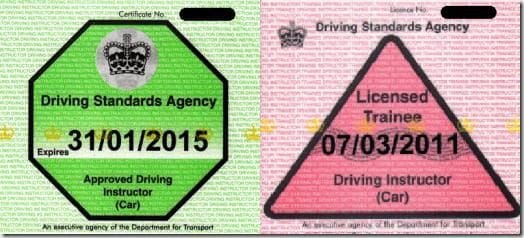
A fully qualified ADI will display a green badge in their car’s windscreen.
A PDI (trainee instructor) will display a pink badge.
No badge = no lesson.
3. Avoid Cash-Only Deals
Reputable instructors accept traceable payments (card, invoice, or bank transfer). Cash-only “discounts” are a red flag.
4. Book Through Trusted Platforms
Platforms like Rated Driving verify every instructor’s DVSA approval before they can accept bookings. Learners never have to worry about legitimacy — it’s guaranteed.
5. Trust Your Gut
If something feels off — the car isn’t dual-controlled, the instructor can’t show ID, or prices seem too good to be true — it probably is.
What This Means for the Industry
For driving instructors, stories like this are more than irritating headlines — they’re damaging to the profession’s reputation.
Every fake instructor makes it harder for genuine ADIs to build trust, and harder for learners to distinguish professionalism from fraud.
That’s why industry collaboration is essential — not just from the DVSA, but from booking platforms, associations, and training providers alike.
At Rated Driving, we’ve introduced multi-layer verification for all instructors.
This is the level of oversight the digital era demands — and it’s the only way to protect both learners and legitimate professionals from the growing risk of impersonation.
The Enforcement Challenge
The DVSA and local police forces do pursue fraudulent instructors, but resource limitations make proactive enforcement difficult.
Most cases are discovered by chance — a traffic stop, a learner complaint, or an insurance check that doesn’t add up.
Without a centralised digital flagging system, enforcement remains reactive. A national reporting tool — similar to the GOV.UK scam reporting portal — could allow learners and instructors to quickly flag suspicious individuals, helping authorities act sooner.
Technology can be part of the solution, but awareness remains the first line of defence.
A Teachable Moment
While it’s easy to focus on the fraud itself, this case also offers an opportunity for education — both for learners and for the wider industry.
We can treat it as a cautionary tale that reinforces the importance of:
Transparency in how lessons are booked and paid for.
Verification of instructor credentials before a single mile is driven.
Collaboration between digital platforms and regulatory bodies to modernise oversight.
It’s a chance to reaffirm what ethical instruction stands for: safety, trust, and qualification.
Rated Driving’s Commitment to Safety and Legitimacy
At Rated Driving, every instructor listed on our platform is verified as DVSA-ADI or PDI.
We act as an agent — not a school — ensuring that the instructors we connect learners with are properly qualified, insured, and active on the official register.
Our vetting process includes:
Licence and badge verification against the DVSA register.
Secure, traceable payment systems (no cash-only arrangements).
Learners deserve total confidence that the person teaching them to drive meets the legal standard — and we’re committed to providing that.
The Road Ahead
The “fake instructor” case is more than a headline — it’s a reminder of how fragile trust can be in an overstretched system.
With instructor shortages, test delays, and rising lesson costs, the temptation for shortcuts grows.
But driving tuition isn’t something to take shortcuts with — lives depend on it.
The DVSA, police forces, and digital intermediaries like Rated Driving must continue working together to protect learners and uphold the integrity of the profession.
If there’s a positive takeaway, it’s this: awareness is spreading.
Learners are becoming savvier. Platforms are becoming stricter.
And the more sunlight we bring to stories like this, the harder it becomes for fraudsters to operate in the shadows.
Final Thoughts
The learner in Bletchley was lucky — police intervened before anyone was harmed.
But countless others could be unknowingly putting themselves at risk every day.
The lesson is clear:
- Not every car with L-plates is what it seems.
- Always check. Always verify. Always drive with someone qualified.
Because when it comes to learning to drive, safety and trust aren’t optional extras — they’re the foundations of everything we do.