
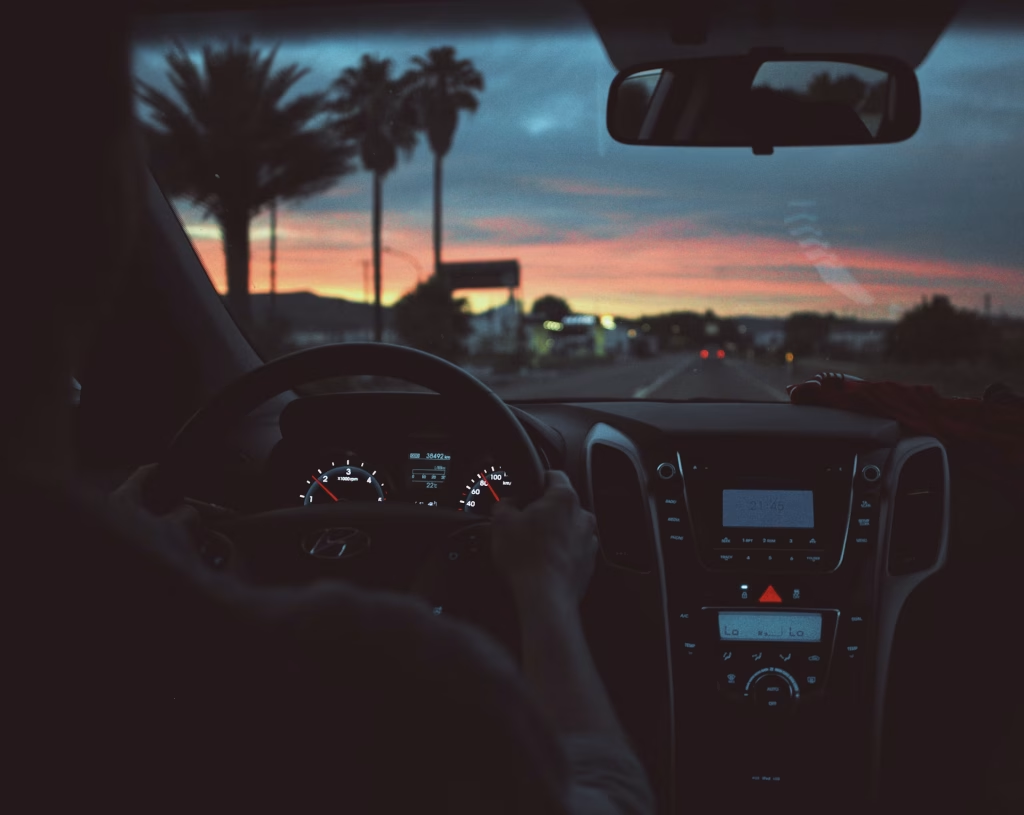
The roads and highways in Great Britain are busy around the clock, with people travelling for work, leisure, and other reasons. According to the official data, car traffic here witnessed an increase of 1.9% from 2023 to 2024. The actual number is huge, with 256.1 billion vehicle miles covered by cars and taxis.
Besides cars, heavy vehicles like trucks and buses traverse the roads during the day and at night too. However, night driving poses unique challenges that even experienced drivers can undermine. That’s probably the reason why more mishaps are reported after dark.
As a driver, you can limit your risk by understanding the threats and mistakes that should be avoided. A little caution can ensure a safe journey after dark.
Mistake #1: Not Knowing Your Route
Unfamiliarity with your route can increase your risk when behind the wheel at night. When you don’t know where you’re going, there are chances that you will make sudden turns or miss exits. You may even end up being distracted by GPS devices or maps.
According to Road Safety GB, older drivers rely greatly on Sat Nav systems or smartphone maps to navigate the roads. People over 65 tend to use these apps more to overcome the problem of a poor sense of direction. However, whether you are young or old, being glued to a navigation app on your phone can take your attention away from the road.
Reduced visibility and limited reaction time at night can compound the impact of these mistakes. Even worse, recovering from a wrong turn or navigating unexpected road conditions can be challenging after dark.
You can avoid this mistake by researching and planning your route before embarking on the drive. Using GPS with voice guidance is a good idea as it minimises the need to look away from the road. If you lose your way, pull over safely to reorient yourself instead of trying to figure it out while driving.
Mistake #2: Overspeeding
The speed limit is a big question mark in the UK. According to Auto Express, recent data cited by the Department for Transport (DfT) is a reason to worry. It shows that nearly 40% of UK drivers flout the speed limits, both on motorways and in 30mph zones. The situation is even worse in the 20mph zones, with 76% of drivers breaking the limits.
Let us compare the situation with the US, where limits are higher in some parts. Every state in the US has speed limits for drivers to stick to for safety and legal compliance. For example, in Georgia, drivers cannot go beyond 65 mph on a multi-lane divided highway or urban interstate. The limit for rural interstate is 70 mph, while that for residential areas in cities is 30 mph.
Despite these rules, Atlanta ranks as one of the worst cities for American drivers, only behind Miami and Portland. Overspeeding accidents are common, and the demand for a car accident lawyer in Atlanta is always high.
According to Atlanta Personal Injury Firm, Georgia witnessed 1,664 car accident fatalities in 2020. This made the state the fourth in terms of the most deaths in the country. The risk of accidents is high when you miss out on speed limits at night.
Travelling faster than your headlights can illuminate the road ahead is a bad idea, whether you are in the US or the UK. This means you may not have enough time to react to unexpected hazards, such as other vehicles, animals, debris, or sudden stops. To stay safe, you must always drive at or below the speed limit after dark.
Mistake #3: Driving When Drowsy or Tired
Drowsy driving is as dangerous as driving under the influence of alcohol or drugs. In fact, a BBC article published in 2024 suggested that fatigue-related deaths on the UK roads jumped by 59% between June and August compared to December and February. Moreover, National Highways reported that fatigue led to 13% of severe injuries and fatalities between 7 pm and 6.59 am.
Fatigue is a leading contributor to nighttime accidents. The body’s natural circadian rhythms make drivers more prone to drowsiness between midnight and early morning. Driving during these hours can impair concentration and slow reaction times. Even worse, it increases the risk of falling asleep at the wheel.
Fatigue-related crashes are preventable with a few actionable steps. Get adequate rest before hitting the road at night. Take regular breaks on long trips. If you feel sleepy, just pull over and rest. Never try to power through exhaustion, no matter how much you want to reach somewhere.
Mistake #4: Overlooking Visibility
Visibility is perhaps one of the biggest challenges of night driving. Darkness reduces depth perception, colour recognition, and peripheral vision. Conditions like fog, rain, or snow can worsen the visibility.
Dirty windshields, malfunctioning headlights, or failing to use high beams when required can further compromise your view. If you drive at night frequently, you must go the extra mile with vehicle maintenance. Your headlights, taillights, and signal lights should be clean and functioning.
Also, keep your windshield and windows clean, inside and out, to reduce glare and improve clarity. Remember to use high beams on rural or poorly lit roads. However, dim them when approaching other vehicles. Adjust your mirrors to reduce glare from headlights behind you.
FAQs
What is the biggest hazard when driving at night?
The single biggest hazard when driving at night is reduced visibility. Darkness affects your ability to see obstacles, pedestrians, road signs, and other vehicles. The situation worsens in bad weather. Poor visibility means you have less time to react to unexpected situations.
Why do most accidents occur at night?
Most accidents occur at night due to a combination of factors. For example, reduced visibility, driver fatigue, and a higher incidence of speeding or distraction increase the risk. Similarly, the increased likelihood of impaired or reckless drivers makes night driving trickier. These risks are compounded by the body’s natural tendency toward drowsiness during late hours.
What is the most alarming distraction when driving?
Daydreaming or “zoning out” is the most common and alarming distraction. When you zone out, your mind completely goes off the task of driving. However, texting and calling are dangerous distractions. They combine visual, manual, and cognitive impairment.
Night driving demands heightened awareness and caution. However, accidents can happen despite all precautions. Remember, the best way to arrive safely is to respect the unique challenges that come with driving after dark.