
Quick summary
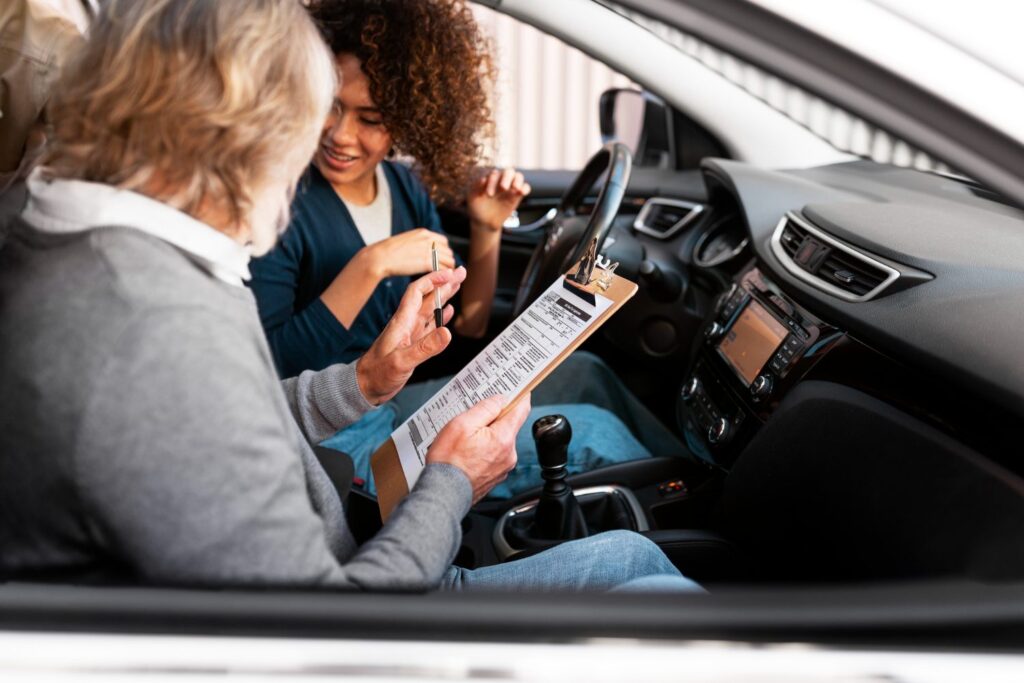
Manual driving lessons teach you how to control a clutch and gears while building the same road skills every driver needs: observation, judgement and planning. If you want maximum flexibility after you pass (driving manual and automatic cars), learning in a manual is usually the simplest way to keep your options open.
What are manual driving lessons?
What you learn in a manual car (beyond “just gears”)
Manual driving lessons cover everything you’d learn in an automatic – safe routines, positioning, roundabouts, junctions, meeting traffic, independent driving – plus the extra skills that come with a clutch and gearbox.
That “extra layer” is mainly:
Clutch control (finding the biting point, moving off smoothly, crawling in traffic, hill starts)
Gear choice (matching gear to speed and road conditions)
Smooth control (not stalling, not rolling back, staying calm under pressure)
The good news: the clutch and gears do become automatic (in your brain) with repetition. The bad news: early lessons can feel like juggling, which is why the right instructor and a clear plan matter so much.
Who manual lessons suit best
Manual car lessons tend to suit you if:
you might need to drive a manual car later (work vehicles, borrowing family cars, cheaper first-car options)
you don’t mind a steeper learning curve in the first few lessons
you want one test that gives you the broadest licence flexibility
If you’re not sure you’ll ever touch a manual after passing, you might also want to compare your options in our guide to manual vs automatic: the big decision facing Britain’s learner drivers.
Manual driving lessons near me: how to find the right instructor
Start with location and availability (because gaps cost you money)
Most learners searching “manual driving lessons near me” want someone local and a schedule they can actually stick to. Consistency is one of the biggest drivers of progress – long gaps often mean you spend time “warming up” again.
A simple way to compare local options is to start with a postcode search on Rated Driving’s driving lessons page and then filter your shortlist by lesson times, pick-up points and transmission.
Check they’re registered and legitimate
If you’re paying someone to teach you, they must be registered with DVSA and display a badge in the windscreen during lessons. GOV.UK explains the badge colours (green for qualified, pink for trainee) on its page about taking driving lessons.
If someone won’t show a badge, gets defensive, or pressures you into paying before you’ve even had a proper chat, walk away. It’s not worth the risk.
Ask these questions before lesson one
You’ll get a faster “is this a good fit?” signal by asking a few specific questions:
How do you structure the first 5–10 hours for a complete beginner?
Do you teach clutch control with a clear method (biting point, slow lift, hold, then gas)?
What’s your cancellation policy?
Do you recommend 60 or 90 minutes for manual learners?
How do you track progress so lessons don’t feel random?
If you want a full shortlist checklist, use our step-by-step guide on driving instructors near me.
How to get good at clutch control (without feeling embarrassed)
The biting point: the one thing to master early
The biting point is the moment the clutch starts to connect the engine to the wheels. Most manual stress comes from lifting the clutch too quickly, especially when you’re also trying to steer, check mirrors and look for traffic.
A calm, repeatable way to learn it is:
Find biting point on flat ground (no gas at first, just feel the car’s nose lift slightly)
Hold it still (count “one… two…”)
Add gentle gas (think “small squeeze”, not “stamp”)
Finish the lift slowly once you’re moving
The goal isn’t to be fast – it’s to be consistent.
Stalling: what to do when it happens
Everyone stalls. The difference between a confident learner and a stressed learner is what happens next.
If you stall:
Brake and clutch down (control the car first)
Neutral, restart (your instructor will guide you)
Reset and go again without apologising for 5 minutes
Stalling isn’t “failure”; it’s feedback. It usually means one of three things: clutch came up too fast, not enough gas, or the wrong gear.
Gear changes that feel smooth (not jerky)
Jerky changes often come from rushing the clutch or changing gear while the car isn’t stable.
A learner-friendly rhythm:
build speed gently
come off the gas slightly
clutch down
change gear
clutch up smoothly
back on the gas
You’ll also learn when not to change gear – for example, when you’re approaching a hazard and need control more than speed.
Hill starts: the confidence-maker
Hill starts scare learners because rolling back feels like a disaster. In reality, it’s a teachable routine.
Most instructors teach either:
handbrake hill start (set gas, find bite, release handbrake), or
footbrake method (more advanced, depends on situation and instructor approach)
Either way, your aim is the same: secure the car, find bite, set gas, then release smoothly.
What your first manual driving lessons should look like
Lesson 1-3: build control on quiet roads
Early manual lessons should feel “slow and safe”, not thrown into chaos. Expect:
cockpit drill and safe setup
moving off and stopping
basic steering and positioning
clutch feel and early gear changes (where appropriate)
If lesson one is instantly busy roundabouts with zero clutch work, ask why. Your confidence matters.
Lesson 4-10: junction routines and real-world driving
Once you can move off and stop reliably, your instructor should start building:
approach speed and gear choice
mirror routines and signalling
left and right turns at junctions
meeting, crossing and dealing with parked cars
roundabouts in stages (mini > normal > busier)
There’s no “minimum number of lessons”
A common myth is that you “must” do a set number of hours. GOV.UK is clear there’s no minimum number of lessons or practice hours – it depends on how quickly you learn and practise in between on its guidance about taking driving lessons.
If you want a realistic way to plan your timeline (without guessing), our guide on how many driving lessons do I need to pass? breaks it down into progress milestones.
Summary Table
| What to get right early | What it should look like |
|---|---|
| Instructor legitimacy | Badge displayed in the windscreen during paid lessons, as explained on GOV.UK. |
| Clutch confidence | Biting point practice on quiet roads before “busy” driving. |
| Gear changes | Smooth, repeatable rhythm — no rushing the clutch. |
| Lesson structure | Each lesson has a goal, a recap, and a clear “next step”. |
| Consistency | Weekly lessons (if possible) to avoid relearning. |
| Private practice | Only if legal, insured, and supervised correctly (see GOV.UK rules). |
| Dual controls | Most tuition cars have them; understand how they work (see dual control cars). |
| Manual vs automatic decision | Manual gives maximum flexibility; automatic can be simpler (see manual vs automatic). |
How much do manual driving lessons cost (and how to save)
Why manual lesson prices vary
Manual lesson pricing depends on where you live, demand, lesson length, and instructor availability. Instead of chasing the cheapest hourly rate, focus on value: fewer cancellations, clearer teaching, faster progress.
For a full UK budget breakdown (lessons, tests and typical extras), see how much are driving lessons in the UK?.
Smart ways to reduce the total cost (not just the hourly rate)
The big cost-savers are boring – but they work:
book consistently (gaps cost you)
ask about off-peak daytime slots
consider 90-minute lessons once basics click
only block book after you trust the instructor
You’ll find a full set of practical tips in our guide to cheap driving lessons, including how to avoid paying for repeat lessons.
Private practice rules (manual learners get caught out here)
Private practice can massively boost manual confidence – but only if it’s legal and safe. GOV.UK says anyone you practise with (without paying them) must be over 21, qualified to drive that vehicle type (manual licence for a manual car), and have held a full licence for 3 years on its page about practising with family or friends.
One more important rule: learners can’t drive on motorways with parents or mates. GOV.UK guidance explains learners may only drive on motorways with an approved driving instructor in a dual-controlled car on supervising a learner driver.
Manual vs automatic: when switching makes sense
Choose manual if your priority is flexibility
Manual is usually the best route if you:
might need to drive a manual car for work
will borrow family cars that are manual
want the broadest licence option without doing another test later
Consider automatic if clutch stress is blocking progress
If you dread lessons because the clutch overwhelms you, switching isn’t “giving up” – it can be a smart decision that helps you learn road skills faster.
If you want to explore that route, start by comparing local options on automatic driving lessons and use your first lesson to judge how much calmer you feel.
Getting test-ready in a manual (what actually causes faults)
The most common manual-specific slip-ups
Manual learners often pick up faults when they’re under pressure, especially:
stalling at junctions because they rush the clutch
coasting (clutch down too early) instead of staying in control
selecting the wrong gear when approaching hazards
rushing hill starts and rolling back
The fix is nearly always the same: slow the routine down and make it repeatable.
Use mock tests to make nerves boring
Near the end of learning, mock tests are gold – not because they’re fun, but because they make test conditions feel normal. Ask your instructor to run mock tests on routes you’re likely to drive, then focus on 1–2 improvement points each time (not ten).
Intensive courses: great for momentum, not great for chaos
If you learn best with fast progress and you can clear time in your diary, a structured intensive option can work well. If your schedule is messy or you get stressed by rapid learning, it can backfire.
If you’re considering it, compare how formats work on our intensive driving course page before you commit.
FAQ's
Many learners find manual harder at the start because you’re learning clutch control and gear changes on top of road skills. Once the clutch “clicks”, it often feels much easier and more natural.
Not automatically – passing faster is mostly about consistency, practice and good lesson structure. Manual can take longer early on for some learners, but it also gives you the broadest licence flexibility after you pass.
Expect a calm introduction to the controls, moving off and stopping, and lots of clutch practice on quiet roads. A good instructor will keep it simple and give you a clear goal for the lesson.
Start with a postcode search, then shortlist instructors based on availability and pick-up points rather than just price. Using Rated Driving’s driving lessons search can help you compare local options quickly.
They must display a badge in the windscreen during paid lessons, as explained on GOV.UK’s taking driving lessons guidance. If they won’t show it or pressure you to pay upfront without clarity, don’t continue.
No – it’s a normal part of learning manual and most learners stall at some point. The key is having a calm reset routine and understanding why it happened so it becomes rarer over time.
Yes, as long as it’s legal, insured, and supervised correctly. GOV.UK explains who can supervise and the rules on its page about practising with family or friends.
Only with an approved driving instructor in a dual-controlled car. GOV.UK states this clearly in its guidance on supervising a learner driver.
Sometimes, but it depends on your area and instructor availability. The bigger saving is usually total hours needed, which comes from consistent lessons and practice – see our tips on cheap driving lessons.
There’s no fixed number, and GOV.UK confirms there’s no minimum hours requirement for learning. For a practical way to plan your timeline, use how many driving lessons do I need to pass?.