

Quick summary
If you’re searching “driving instructors near me”, you’re usually trying to find someone local, available soon, and trustworthy (without wasting money on the wrong fit). This guide shows you exactly how to shortlist instructors, check they’re legit, and choose lessons that match your goals and budget.
Driving instructors near me: what you’re really searching for
“Near me” isn’t just distance – it’s convenience and progress
Most learners don’t actually want the closest instructor. You want someone who can pick you up near home, college, uni or work, cover the routes you’ll actually drive on, and offer lesson times that fit your life.
That convenience matters because consistency is what builds confidence: regular lessons, fewer long gaps, and less time spent relearning things you already did.
It’s also why “near me” searches often include extra phrases like driving lessons near me, manual driving lessons near me, automatic driving instructor near me, female driving instructor near me, intensive driving course near me, and cheap driving lessons near me. They’re all the same intent: “Help me start quickly with someone I can trust.”
Driving school vs independent instructor: what’s the difference?
You’ll usually come across:
Independent instructors (self-employed): often flexible, sometimes quicker availability, and you’re dealing directly with the person teaching you.
Driving schools: can have more coverage and choice, but you may be assigned an instructor based on availability.
There’s no automatic “best” option. What matters is whether the instructor is properly registered, teaches in a way that clicks for you, and helps you make steady progress.
Step-by-step: how to find driving lessons near you (and shortlist fast)
Step 1: Start with postcode, then filter by what you actually need
A postcode search is the quickest way to see who’s genuinely local and active in your area. On Rated Driving, you can use the UK-wide coverage on our driving lessons pages to start with location first, then narrow down by lesson type and availability.
When you’re comparing instructors, don’t just ask “Are you free?” Ask:
What days/times do you usually teach in my area?
Where are your typical pick-up points?
How often can I realistically have lessons?
A great instructor who can’t fit you in is still a delay.
Step 2: Choose manual vs automatic early (it affects availability)
Manual instructors can be easier to find in some areas because demand is spread out. Automatic demand has risen in many places, which can mean fewer instructors and longer waits.
If you already know you want automatic (or you’ve tried manual and hated it), you’ll save time by searching only for that – Rated Driving’s automatic driving lessons section is built for exactly that type of search.
If you’re torn, think about:
Confidence: automatics remove clutch control, which helps some learners focus on the road.
Future plans: a manual licence gives you more flexibility, but if you know you’ll only drive automatic anyway, that flexibility may not matter to you.
Step 3: Read reviews like a pro (and avoid the traps)
Reviews can help, but only if you read them with the right mindset.
Look for patterns around:
Punctuality and reliability (late cancellations can wreck your momentum)
How they explain things (calm, clear, not shouty)
Lesson structure (do you finish lessons knowing what you improved and what’s next?)
Be cautious if you see lots of vague reviews that sound the same, or if the only positives are “nice person” with no detail about teaching quality.
Step 4: Create a shortlist of 2–3 instructors (not 10)
Most learners waste time sending messages to loads of instructors and then end up overwhelmed. Shortlist 2–3 options and ask the same questions to each so you can compare properly:
What’s your availability for the next 2 weeks?
Do you teach test routes around my area?
What’s your approach for nervous beginners?
Do you recommend pay-as-you-go or block booking?
How to check an instructor is legit (DVSA badge + red flags)
Green badge vs pink badge: what you should know
In Great Britain, anyone you pay to teach you should be either a qualified Approved Driving Instructor (ADI) or a trainee instructor, and they should display a badge in the windscreen. GOV.UK explains this under its guidance on taking driving lessons and checking your instructor’s badge so you know what you’re looking for before you get in the car.
If someone refuses to show their badge, gets defensive, or tries to rush you into paying before you’ve even met, treat that as a serious red flag.
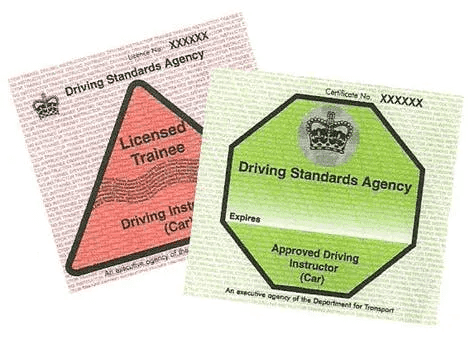
How to verify if an instructor isn’t listed online
Sometimes you’ll find an instructor through social media or a local recommendation and they’re not easy to verify at a glance. GOV.UK’s find driving schools, lessons and instructors page explains how to contact DVSA to check if an instructor is qualified (you’ll usually need their name and ADI number if you have it).
Scam-proof habits that protect your money (and your momentum)
Most issues learners run into aren’t dramatic scams – they’re “soft” problems that still cost you time and cash:
Paying a big chunk upfront without anything in writing
No clear cancellation policy
Being pushed into an unrealistic test date before you’re ready
A simple rule: on your first lesson, you should feel more informed than before you started. If you feel confused, pressured, or like you’re being sold to, step back.
If you do suspect someone is charging illegally, GOV.UK has a clear route to report an illegal driving instructor.
What to ask before you book (so you don’t waste money)
The “good fit” questions (that reveal teaching style fast)
A strong instructor won’t just say “We’ll see how it goes.” They’ll have a plan.
Ask:
How do you structure lessons for complete beginners?
How do you measure progress (and tell me what to work on)?
What do you do if I’m anxious or keep making the same mistake?
You’re looking for calm clarity, not bravado. The best instructors make hard things feel simple.
Lesson planning: how to avoid “random driving”
Random lessons are a common reason learners feel like they’re spending loads but not improving. You want a progression like:
Car controls + moving off safely
Junctions + basic manoeuvres
Busier roads + roundabouts
Independent driving + mock tests
You don’t need to follow that exact order, but you do need an order.
Practical details that matter more than people think
Before you commit, get clear on:
Pick-up and drop-off: can they collect you where you actually are?
Car setup: are there dual controls? (Most professional tuition cars will have them.)
Lesson length: many learners benefit from 90-minute lessons once basics are covered, but it depends on your focus and stamina.
Summary Table
| What you need to know | Details |
|---|---|
| “Near me” means convenience | Pick-up points, lesson times, and local routes matter more than miles. |
| Shortlist 2–3 instructors | Compare answers to the same questions instead of messaging everyone. |
| Choose manual vs automatic early | It affects availability, pricing, and how you progress. |
| Check the badge | Paid instructors should display a DVSA registration badge in the windscreen. |
| Avoid pressure tactics | Be wary of rushed payments, vague policies, or unrealistic promises. |
| Ask about lesson structure | You should know what you’re improving and what’s next. |
| Budget smarter | Mix lesson frequency, block bookings, and private practice (legally). |
| Private practice has rules | Supervisors must meet DVSA requirements, and motorways have specific restrictions. |
| Progress comes from consistency | Regular lessons and clear goals beat “now and then” learning. |
How much do driving lessons near me cost (and how to keep it affordable)
Why prices vary (and why that’s normal)
Lesson prices vary a lot by location, car type, and instructor demand. There isn’t a national minimum or maximum price – instructors set their own rates – which GOV.UK also notes in its guidance on taking driving lessons. So the right question isn’t “What’s the cheapest?” but “What’s the best value for consistent progress?”
Value looks like:
You can book regularly
You’re progressing week to week
You’re not paying to repeat the same basics – poor structure
Pay-as-you-go vs block bookings vs intensive courses
Most learners will pick one of these routes:
Pay-as-you-go
Best if your schedule changes a lot
Good for trying an instructor before committing
Can cost more per hour in some areas
Block bookings
Often better value per lesson
Helps you stay consistent (you’re more likely to stick with it)
Only worth it once you’re confident the instructor is a good fit
Intensive courses
Great if you can commit time and you learn well with momentum
Not ideal if you need longer gaps to process and practise
Useful if you have a deadline (job, placement, moving)
If an intensive route is on your mind, it’s worth reading how options typically work on Rated Driving’s intensive driving course page so you can sanity-check whether the pace matches your learning style.
A simple learner budget plan that actually works
A practical approach many learners use:
Aim for 1–2 lessons per week (whatever you can genuinely sustain)
Add private practice between lessons when possible (legally and safely)
Review your progress every 5–10 hours and adjust
If you want to get realistic about costs, your best starting point is our breakdown of how much driving lessons cost in the UK because it helps you plan beyond “just the hourly rate.” And if you’re trying to keep costs down, you’ll also find practical saving tactics in our guide to cheap driving lessons (without cutting corners on safety or quality).
Make faster progress between lessons
Private practice: who can supervise you (and what’s allowed)
Private practice can be a huge confidence boost, especially for repeating quiet-road basics like clutch control, bay parking, or smoother braking. But it only helps if it’s legal and properly supervised.
GOV.UK’s guidance on how to supervise a learner driver explains who can sit with you and what conditions apply (including age and licence requirements). If your supervisor doesn’t meet the rules, you risk turning “practice” into a serious problem.
Motorways: when learner drivers can (and can’t) go on them
A common myth is “If my parent supervises me, I can try the motorway.” In Great Britain, motorway driving as a learner has specific conditions, and GOV.UK’s supervise a learner driver guidance makes clear that motorway driving is only allowed for learners when they’re with an ADI in a car fitted with dual controls.
So if you want motorway practice, plan it as part of professional lessons — not private practice.
The 10-minute routine that makes every lesson more effective
This sounds small, but it’s one of the quickest ways to improve faster:
Before each lesson:
Write down one thing you struggled with last time
Pick one skill you want to improve today
Decide what a “win” looks like (e.g., smoother roundabouts, better mirrors, calmer junction approach)
After each lesson:
Note what you improved
Note what you’ll practise next
Ask your instructor what they want you to focus on between lessons (even if it’s just mindset and observation)
That’s how you avoid paying for the same lesson twice.
Booking with Rated Driving: a simple way to match with local instructors
Use filters that actually matter to learners
If you’re searching “driving instructors near me”, your best shortcut is a platform that lets you sort by what you care about – location, transmission, and lesson type – without endless back-and-forth. That’s why learners often start with the Rated Driving driving lessons search, then narrow to options like automatic driving lessons if that’s your preference.
What a “good first booking” looks like
A strong first booking usually includes:
A clear pick-up location and time
A short chat about goals (beginner, returning learner, test soon)
A sense of structure by the end of lesson one
You don’t need perfection on day one – you need a plan and a calm start.
FAQs
Start with a postcode search and shortlist 2–3 instructors based on availability and lesson type (manual or automatic). If you want a fast way to compare options by area, using a location search like Rated Driving’s driving lessons pages saves time.
They should display a badge in the windscreen that shows they’re registered, and GOV.UK explains what you should see on its page about taking driving lessons and checking your instructor’s badge. If someone avoids the question or won’t show it, don’t book more lessons.
Either can be great – the key is whether the instructor is properly registered, reliable, and teaches in a way that makes you improve consistently. Focus on availability, lesson structure, and communication rather than the label.
Automatic can feel simpler early on because you don’t have clutch control, while manual gives you more flexibility once you pass. If you already know you prefer two pedals, starting with Rated Driving’s automatic driving lessons helps you avoid wasting time searching the wrong category.
Not in private practice – motorway learning has specific conditions in Great Britain. GOV.UK’s guidance on supervising a learner driver explains that motorway driving as a learner is only allowed with an ADI in a dual-controlled car.
There’s no fixed number because it depends on how quickly you pick things up and how much you practise between lessons. What matters most is consistency and having clear goals, not racing to a number.
They can be good value and help you stay consistent, but only once you’re sure the instructor is right for you. Many learners do a couple of pay-as-you-go lessons first, then switch to a block once the fit feels right.
Ask about availability, pick-up points, lesson structure, and how they measure progress. You’ll usually get a strong signal from how clearly (and calmly) they answer.
The safest “cheap” strategy is better value, not random bargains – things like block bookings, steady lesson frequency, and legal private practice. For practical ways to cut costs without cutting corners, use the tips in our guide to cheap driving lessons.
It can be if you learn well with momentum and you can commit time consistently over a short period. If you’re considering that route, check the format and expectations on Rated Driving’s intensive driving course page so you choose a pace you can realistically handle.