
Why the Cockpit Drill Matters More Than You Think
You wouldn’t take off in a plane without the pilot running through their pre-flight checks.
You wouldn’t start a marathon without lacing up your trainers properly.
So why would you set off in a car — a 1.5-tonne machine capable of high speeds — without checking that you and the vehicle are perfectly prepared?
That’s exactly what the cockpit drill is for: a systematic routine that sets you up for safety, comfort, and control before you move even an inch. It’s the very first thing most driving instructors teach — because everything else you’ll learn builds on this foundation.
What Is the Cockpit Drill?
The cockpit drill is a pre-driving safety check performed before starting a vehicle, ensuring the driver is in a safe and comfortable position.
It’s a routine that follows the DSSSM sequence: Doors, Seat, Steering, Seatbelt, Mirrors.
This routine involves checking that all doors are closed, adjusting your seat, setting the steering wheel position, fastening your seatbelt, and adjusting your mirrors.
By following this simple sequence every time, you reduce risks, ensure a clear view of the road, and position yourself to operate every control with ease. When done right, it transforms you from just sitting in a car to being in full command of it.
The cockpit drill isn’t just a boring checklist to please your instructor.
It’s a performance enhancer and safety shield rolled into one. Here’s why:
Sharper reaction times — everything is positioned for instant control.
Reduced fatigue — correct posture means less strain on your back, neck, and arms.
Wider awareness — mirrors and seating position maximise your field of vision.
Lower accident risk — you’re ready for hazards before they even appear.
When you treat it as second nature, you won’t just pass your driving test — you’ll start every journey as a safer, calmer, more confident driver.
Step-by-Step: How to Perform the Cockpit Drill
We’ll break this into the exact sequence your instructor will expect.
Think of it as the recipe for getting yourself “driving ready” in under a minute.
1. Doors
It sounds obvious, but many learners forget this first step — and it can lead to trouble.
A door that isn’t properly shut can:
Trigger warning lights or sounds.
Swing open unexpectedly (dangerous and illegal).
Distract you mid-drive.
How to check:
Listen for the reassuring click when closing the door.
Glance at your dashboard — many modern cars have a door warning indicator.
If unsure, push gently on the inside edge of the door to confirm it’s latched.
2. Seat
Your seat is your command centre. Get it wrong, and you’ll compromise comfort, control, and safety.
What to do:
Sit with your back fully against the seat.
Adjust forwards or backwards so you can fully press the clutch without locking your knee.
Check you can reach the steering wheel with a slight bend in your arms.
Ensure your hips are level with or slightly above your knees for a natural driving posture.
Why it matters:
Poor seat position leads to overreaching, slower reactions, and muscle strain — all of which make you a worse driver.
3. Steering
If your instructor’s car has an adjustable steering column, take advantage of it.
Set it so:
You can hold the wheel at “ten-to-two” or “quarter-to-three” comfortably.
Your wrists rest lightly on the top of the wheel without locking your elbows.
You have a clear view of the dashboard instruments.
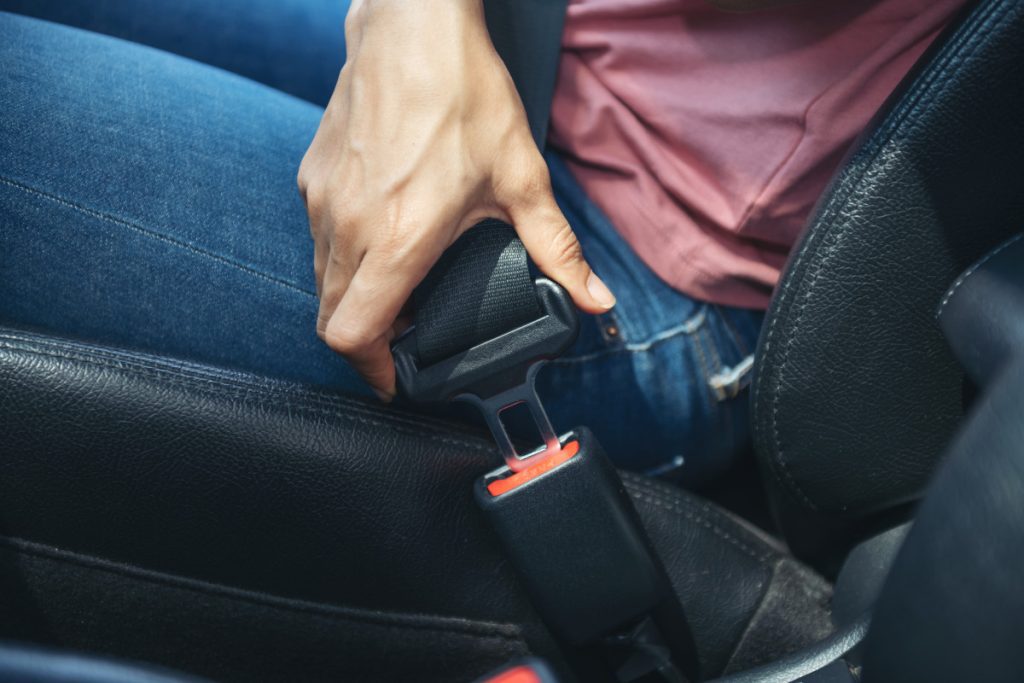
4. Seatbelt
This isn’t just common sense — it’s the law.
Checklist:
Pull the belt smoothly across your body.
Ensure there are no twists.
Click it firmly into the buckle.
Adjust for comfort, with the strap across your chest and lap (not your neck or stomach).
5. Mirrors
Your mirrors are your rear eyes — get them wrong, and you’re driving with blind spots.
Interior mirror:
Adjust so you can see as much of the rear window as possible with a single glance.
Door mirrors:
Position to just show the edge of your car while maximising view of the road behind and to the sides.
Aim to reduce blind spots without tilting them too far outwards.
Pro tip:
Adjust mirrors after your seat and steering wheel — any posture changes will throw them off.
Building the Cockpit Drill into Muscle Memory
Right now, the cockpit drill might feel like a list to memorise. But the goal is for it to become an automatic habit.
The trick? Always do it in the same order — DSSSM. Repetition locks the sequence into your brain so even under pressure, you won’t miss a step.
Common Mistakes Learners Make
Even with the best intentions, new drivers often:
Forget to check all doors (especially the boot).
Adjust mirrors before the seat — wasting time re-doing them.
Sit too far from the pedals, reducing control.
Angle mirrors too far up or down.
Treat the head restraint like a pillow, not a safety feature.
The Science Behind Why It Works
The cockpit drill works because it removes variables.
Once you’ve run through DSSSM, you know:
Your body position is optimal.
Your visibility is maximised.
Your reach to controls is consistent.
That means every time you drive, you’re working from a stable baseline — reducing reaction time and decision fatigue.
How Instructors Teach It
The cockpit drill (DSSSM) is a routine for Doors, Seat, Steering, Seatbelt, and Mirrors — always completed in that order to lock it into muscle memory.
A good driving instructor will:
Demonstrate the drill in real time.
Show you exactly how each adjustment should look and feel from the driver’s seat.
Supervise as you go through the sequence yourself, correcting anything that’s off.
Support you with reminders and prompts until the sequence becomes natural.
Motivate you to keep doing it at the start of every journey, even after you’ve passed.
This DSSSM approach — Demonstrate, Show, Supervise, Support, Motivate — ensures the cockpit drill becomes second nature and never skipped.
Cockpit Drill vs. Pre-Flight Checks
There’s a reason pilots follow strict checklists before every flight — no matter how experienced they are.
Driving might not be flying at 30,000 feet, but the principle is the same: prevent problems before they happen.
When to Do the Cockpit Drill
At the start of every lesson — even if the car “looks fine”
Every time you swap drivers — your friend’s settings won’t fit you
After maintenance — mechanics may have altered seat/mirror positions
If you’ve been away from the car — you might have forgotten your ideal setup
Why Your Examiner Cares
On your driving test, the examiner won’t expect a formal “checklist recital” — but they will notice if:
You adjust mirrors before moving off.
You seem comfortable and in control from the start.
You’re not craning your neck or stretching for controls.
A confident, smooth start sets the tone for the whole test.
The Safety Statistics
The UK’s Department for Transport notes that poor observation is a leading cause of accidents.
Improper seat and mirror positioning is a hidden contributor to that — because you literally can’t see hazards in time.
Following the cockpit drill is a zero-cost way to remove that risk.
Advanced Tips for Mastering the Cockpit Drill
Visualise the DSSSM sequence before you get in the car — it reinforces memory
Pair each step with a physical trigger (e.g., “Close door → adjust seat”)
Check mirrors for condensation or dirt — visibility isn’t just about angle
Reassess posture on long drives — fatigue changes how you sit
How the Cockpit Drill Fits Into Your Driving Journey
Before You’re Even Moving
It’s the bridge between “sitting down” and “driving with purpose”.
During Lessons
Your instructor will praise you for doing it automatically — and move you on to more complex skills faster.
As a Qualified Driver
It becomes your personal “insurance policy” against avoidable mistakes.
Cockpit Drill Checklist Recap
Here’s the sequence to engrave in your mind:
Doors — closed and secure
Seat — comfortable reach to pedals and wheel
Steering — adjusted for reach and view
Seatbelt — on, untwisted, adjusted
Mirrors — interior, then exterior
The Bottom Line
The cockpit drill isn’t a “beginner’s ritual” you can drop later.
It’s a lifelong habit that quietly protects you every time you get behind the wheel.
When you nail DSSSM, you’ll start each journey calm, confident, and fully in control — and that’s the first step towards driving not just to pass, but to thrive on the road.
Cockpit Drill FAQ's
DSSSM stands for Doors, Seat, Steering, Seatbelt, Mirrors — the sequence used for the cockpit drill before starting any journey.
It ensures you’re in the safest, most comfortable, and most controlled driving position before moving off, reducing risks and improving awareness.
Yes. Even if the car feels “ready,” seat and mirror positions can shift, and a quick check prevents issues later.
Once you’re used to it, DSSSM should take less than a minute to complete.
No — always set your seat and steering first. Changing them afterwards will throw your mirror angles off.
Not as a formal step, but examiners will expect to see you make the correct adjustments before moving off.
You risk poor visibility, reduced control, or even unsafe driving conditions — all of which could cause mistakes or accidents.
Yes, although the controls and adjustments might look different between vehicles.
Repeat it in the same order every time you get in a car until it becomes automatic.
Where possible, make all adjustments before moving off. Changing seat or mirrors while driving can distract you and create hazards.