
Quick summary
The latest story is not that Britain is about to run out of fuel tomorrow. The stronger and more accurate angle is that the conflict-linked disruption around the Strait of Hormuz has pushed oil prices sharply higher, and UK drivers are already feeling it at the pumps through record monthly price rises.
For most motorists, the immediate risk is higher costs rather than rationing. Emergency powers and fuel-saving measures do exist, but right now the most useful message is to plan ahead, drive efficiently and avoid panic buying.
Why fuel prices are rising again
The original post had the right broad idea but leaned too hard into the most dramatic outcome. The latest verified picture is simpler: global oil markets have been rattled by the conflict involving Iran, the US and Israel, and that has driven up crude prices because the Strait of Hormuz remains one of the world’s most important energy chokepoints.
According to the latest Reuters reporting on oil prices, Brent crude jumped above $109 a barrel on 2 April after fears grew that disruption in and around the Strait of Hormuz could drag on. That matters because even though the UK does not rely mainly on Middle Eastern fuel for everyday road use, oil is traded in a global market. When supply risk rises at a key shipping route, the price impact spreads well beyond the Gulf.
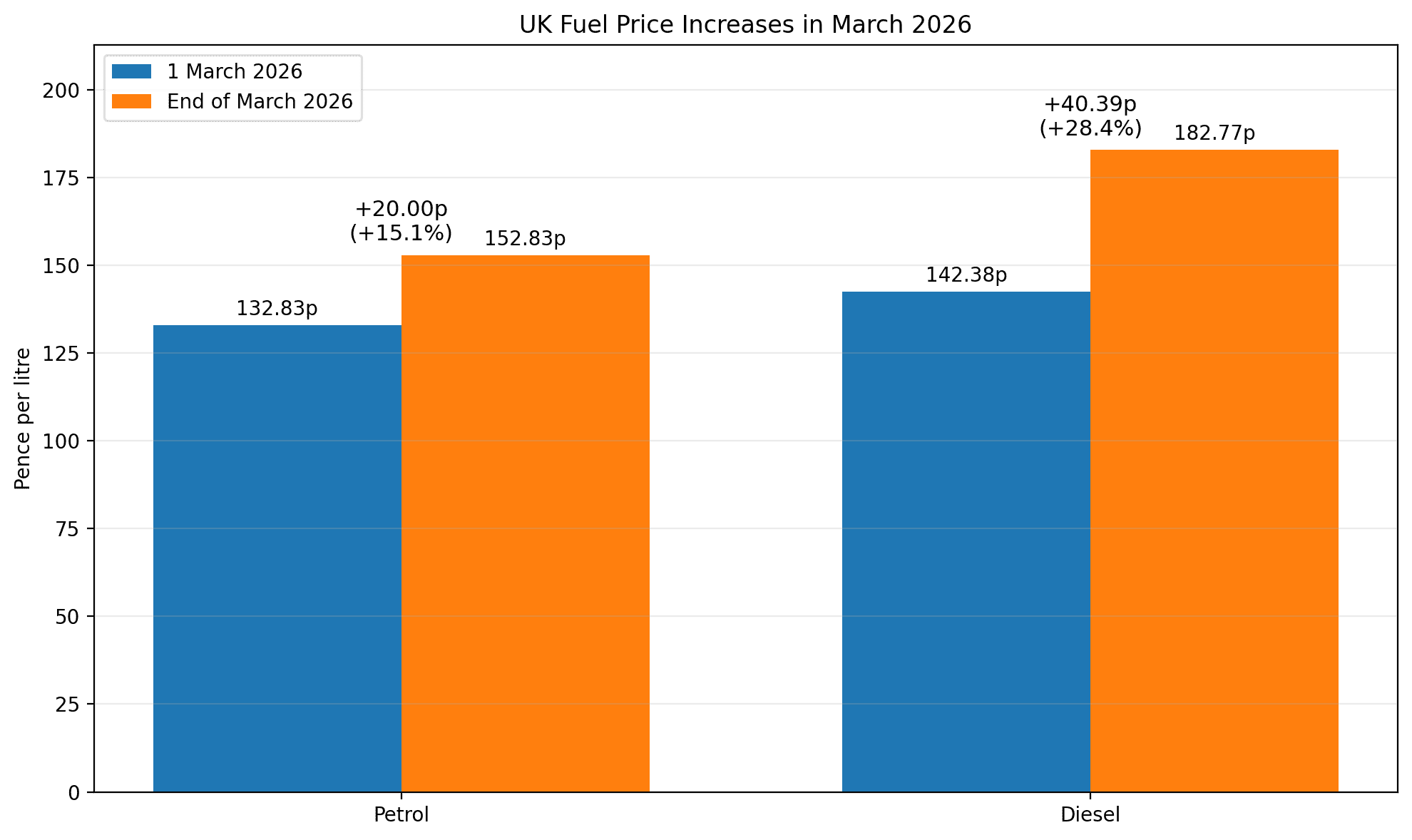
That knock-on effect is already visible in Britain. The latest RAC fuel-price update says petrol and diesel both posted their biggest monthly increases on record in March 2026. Unleaded rose by 20p a litre over the month, while diesel jumped by 40p a litre. For drivers filling a 55-litre family car, that is a meaningful hit to the weekly budget, especially at Easter when road travel is already high.
For Rated Driving readers, this matters in a practical way. Fuel costs affect not just big holiday drives, but lessons, private practice, commuting and everyday confidence behind the wheel. If every trip feels more expensive, people drive differently. Some delay lessons. Some cut down on practice. Some try to cram more into one journey. That is why a calm, realistic explanation matters more than panic.
Is the UK actually facing fuel shortages?
This is where the original version needed the biggest rewrite. The latest evidence does not support telling readers that the UK is on the brink of running out of fuel. The better-supported line is that the UK has a resilience framework, strategic obligations and emergency options if things get worse, but the current pain point is price.
What the UK has in place
The UK is bound by International Energy Agency oil-stocking obligations, which require members to maintain reserves equivalent to 90 days of net imports. The UK government also says in its guidance on emergency oil stocking obligations that these arrangements are designed to help the country respond to supply disruptions.
That does not mean every litre is instantly available for forecourts in exactly the form drivers need, and it does not mean Britain is immune from disruption. But it does mean the “running on empty” framing is too dramatic for the latest verified situation.
There have been signs of strain at individual retailers. Reuters reported that Asda had experienced temporary shortages at some sites because demand surged as drivers reacted to price rises and supply worries. Even so, industry bodies quoted in the same report said overall UK fuel supply remained normal and urged motorists to keep buying fuel as normal rather than stockpiling.
What drivers should take from that
The immediate lesson is simple: do not confuse local supply blips with a national collapse. If more drivers rush to fill up early because they are worried, that behaviour can create the very queues and patchy forecourts people were hoping to avoid.
For learner drivers and families supervising private practice, this is also a reminder to be strategic rather than reactive. It helps to combine trips, plan routes carefully and make each lesson count. That is where structured learning can save money as well as time, whether you are comparing driving lessons near you or trying to find a local driving instructor who can help you progress efficiently.
Could the government restrict fuel use if things get worse?
Yes, but that is not the same as saying restrictions are about to happen. The original article blurred together “possible”, “under discussion” and “likely”. Those are not the same thing.
What emergency powers actually exist
The government’s National Emergency Plan for Fuel sets out the options available if there is a major fuel supply disruption in Great Britain. The aim is to keep supplies as close to normal as possible, but the plan includes a range of statutory and non-statutory measures if normal market responses are not enough.
That means ministers do have tools available in a serious disruption, including measures around fuel prioritisation and broader management of the supply chain. The government has also strengthened its wider framework through core fuel resilience measures, which give the Secretary of State powers intended to support continuity of fuel supply.
What is more likely in the short term
Right now, the more realistic near-term outcome is still higher prices, not blanket rationing. That is the key point for readers. It is worth knowing that emergency plans exist, but it is not helpful to write as though number-plate bans or overnight forecourt shutdowns are around the corner unless there is firm evidence they are imminent.
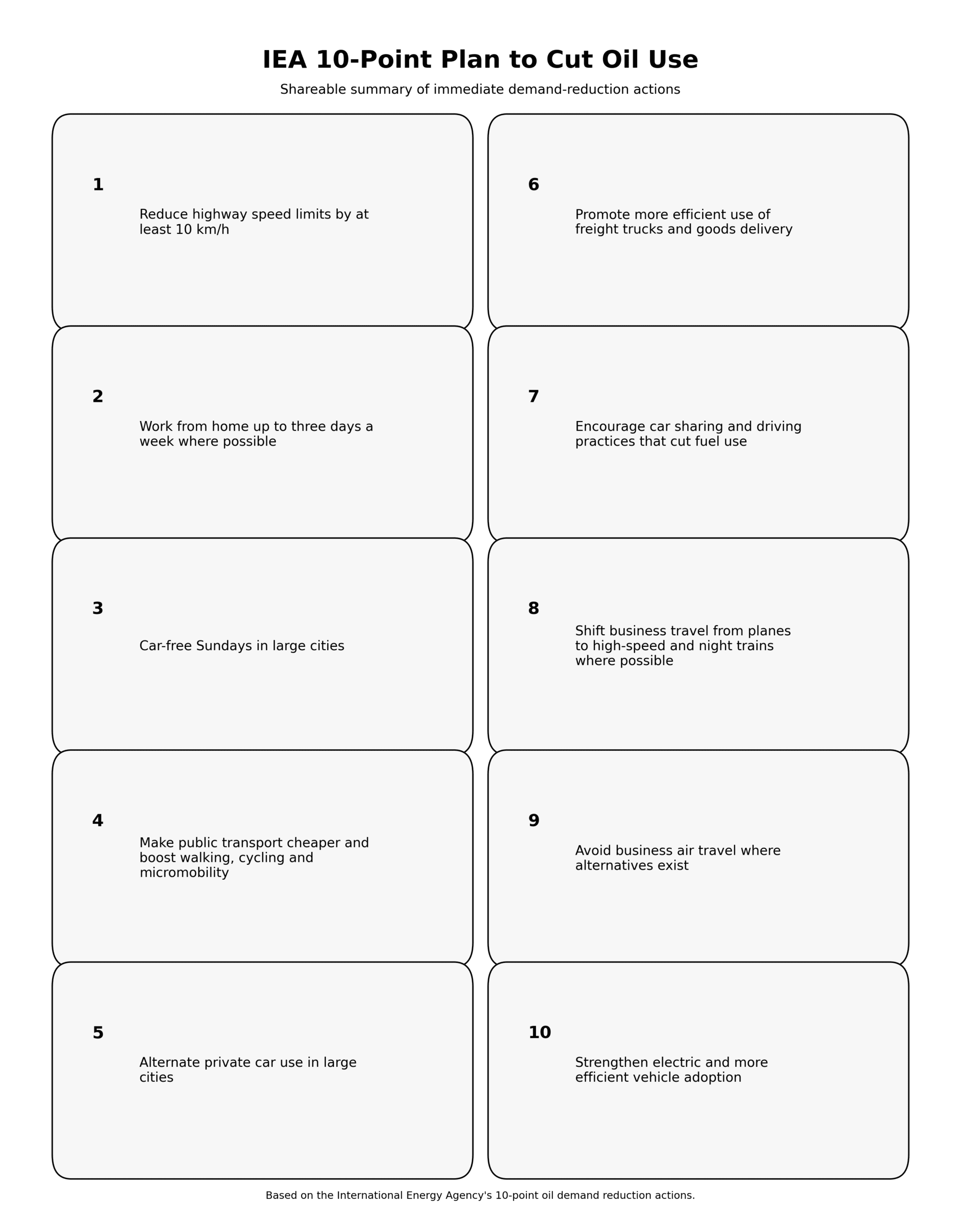
The International Energy Agency has revived discussion of demand-cutting ideas that can reduce oil use quickly. Its 10-point plan to cut oil use includes steps such as lower motorway speeds, more home working where possible and less discretionary driving.
Those are useful examples of the kind of measures governments may consider in an oil shock, but they are not the same as a confirmed UK policy announcement.
That distinction matters. Drivers deserve to know what is happening now, what could happen later, and what is still only an option on paper.
What the latest oil shock means for UK drivers
For most people, the real-world impact is not geopolitical theory. It is what happens when they pull into a forecourt and the price board has jumped again.
Diesel drivers are being hit especially hard
The RAC’s latest numbers show diesel has risen faster than petrol, which matters for van drivers, motorway users and households that still depend on diesel cars for longer journeys. Businesses that move goods by road will also feel the pressure, and that usually feeds through into wider household costs over time.
That is worth spelling out because fuel inflation does not stay neatly in the transport column. It can affect food prices, deliveries, services and family budgets more broadly. The original article hinted at that but needed a cleaner line. Rising fuel prices matter both because driving gets dearer and because the wider cost of living can rise with them.
Petrol is up sharply too
Petrol drivers are not escaping it. A 20p per litre monthly jump is large enough to change behaviour. Some people will shorten trips. Some will shop around more carefully. Some will cut out optional journeys altogether.
That is especially relevant for learners paying for lessons and private practice. If every extra mile feels expensive, progress can start to feel slower or more stressful.
A better answer is not to panic and stop driving altogether, but to make practice smarter. Some learners find automatic driving lessons help them focus more on traffic and planning and less on gear changes, which can make busy and expensive real-world driving feel more manageable.
How to save fuel without making driving harder
This is where Rated Driving can add something useful instead of simply echoing the news cycle. Drivers do not just need another warning that fuel is expensive. They need realistic ways to respond.
Smooth driving still makes a difference
In an expensive fuel market, smoother driving matters more. Gentle acceleration, earlier observation, less harsh braking and keeping a steady speed all help. Those are not just fuel-saving tricks. They are also good habits for safer driving.
This is one reason learner drivers should not dismiss efficient driving as something to think about later. Good anticipation and planning are part of passing the test and part of becoming a calmer road user. The same techniques that help you use less fuel often make you look more in control to an instructor or examiner.
Route planning matters more in stop-start traffic
The shortest route is not always the cheapest route if it means more congestion, more idling and more repeated braking. Checking traffic before setting off, avoiding obvious peak times and combining errands into one journey can all help.
During very busy periods, including the Easter getaway, this matters even more. Rail disruption can also push extra people onto the roads. Network Rail says engineering works are affecting parts of the network over Easter, so some road journeys may be busier than drivers expect.
Basic car checks save money too
Tyre pressures are an easy example. Under-inflated tyres can increase fuel use and wear faster. The same goes for carrying unnecessary weight in the car or leaving roof bars fitted when you do not need them.
These details look small on their own, but when pump prices rise fast, small savings start to matter. They also reduce the risk of avoidable problems on longer journeys.
What this means for learner drivers and newly passed drivers
This is the part many motoring articles miss. Rising fuel prices change behaviour on the road, and newer drivers need to understand that.
Other drivers may be more stressed
When fuel is expensive, congestion is heavy and family budgets are tight, patience tends to get worse. You may see more rushed overtakes, more tailgating, more late lane changes and more frustration at junctions or petrol stations.
For a learner or newly passed driver, the answer is not to mirror that energy. Stay predictable. Leave space. Keep your observations up. Let impatient drivers make their own poor choices without dragging you into them.
Confidence matters more than cramming miles
It is easy to assume you must just “drive more” to make progress. In reality, purposeful driving is better than random miles, especially when every trip costs more. One focused lesson on planning, roundabouts or independent driving can be more valuable than a long, expensive, unfocused drive.
That is why some learners look at intensive driving courses when costs and availability are tight. It is not right for everyone, but a more structured approach can reduce wasted time and make each hour behind the wheel work harder.
What happens next?
No one can honestly promise where oil prices go next. If tensions ease and shipping flows improve, prices could settle back. If disruption worsens, pump prices may rise further and governments may look more seriously at demand-cutting measures.
What we can say now is that the most immediate effect for UK motorists is already here: driving has become more expensive very quickly. The stronger version of the story is not “Britain is running out of fuel”, but “global disruption is feeding through into UK pump prices, and drivers need to plan accordingly”.
That is the Rated Driving angle too. Good driving is not only about handling the car. It is also about judgement under pressure. When roads are busy and fuel is expensive, the best drivers are the ones who plan better, stay calmer and waste less.
Summary table
| What you need to know | Details |
|---|---|
| Main story | Oil prices have jumped because conflict-linked disruption around the Strait of Hormuz has shaken global supply |
| Immediate UK impact | The clearest current effect is sharply higher pump prices, not confirmed national fuel rationing |
| Latest pump-price picture | RAC says petrol and diesel recorded their biggest monthly rises on record in March 2026 |
| Diesel vs petrol | Diesel has risen faster, which is especially painful for longer-distance and business drivers |
| UK supply position | The UK has oil-stocking obligations and emergency planning, so the latest evidence does not support “running on empty” headlines |
| Government powers | Emergency tools exist under the National Emergency Plan for Fuel if a serious disruption develops |
| IEA options | Lower speeds, more home working and less discretionary driving are examples of fuel-saving measures governments may consider |
| Best driver response | Avoid panic buying, check fuel prices locally, plan journeys better and drive more smoothly |
| Learner driver takeaway | Make lessons and practice more purposeful so rising costs do not slow progress unnecessarily |
| Rated Driving view | Higher prices are the real short-term issue, so practical fuel-saving habits matter more than alarmist headlines |
FAQ's
No current evidence supports saying the UK is about to run out of fuel nationally. The stronger and more accurate position is that supply pressures and local forecourt issues can happen, but the main nationwide problem right now is price rather than a confirmed country-wide shortage.
Oil prices have risen because conflict involving Iran, the US and Israel has increased fears about disruption around the Strait of Hormuz, which is one of the world’s key oil shipping routes. When traders worry that supply could be restricted, global crude prices tend to jump quickly and that feeds through into pump prices.
Yes, but diesel has been hit harder in the latest UK data. That means many van drivers, tradespeople and households doing longer motorway miles are seeing especially painful increases.
Emergency powers do exist if there is a severe fuel supply disruption, so it is not impossible in theory. But based on the latest verified position, higher prices and fuel-saving advice are more realistic short-term outcomes than immediate rationing.
It makes sense to keep your tank at a sensible level, but panic buying is usually a bad idea. Sudden surges in demand can create queues and patchy local shortages even when the wider supply picture is still stable.
Start with smoother acceleration, less harsh braking, correct tyre pressures and better route planning. You can also reduce wasted miles by combining errands and checking live traffic before you leave.
In many cases, yes. Higher pump prices can affect lesson costs, private practice decisions and how often learners feel able to get behind the wheel, which is why choosing efficient, well-planned tuition through driving lessons near you can matter even more.
For some learners, yes. Automatic driving lessons can reduce workload in heavy traffic, which may help you focus more on planning and observation and make each paid hour feel more productive.
Usually yes, but be more selective about the kind of practice you do. Short, focused sessions with clear goals are often better than long drives with no real structure, especially if you are working with a local driving instructor who knows which routes will give you the most value.
Be more deliberate with your time behind the wheel. Some learners will benefit from spreading lessons out carefully, while others may find an intensive driving course helps them build momentum and avoid paying for too many stop-start weeks.